Azteca’s Heartbreak: Mexico’s World Cup Elimination Shatters a Nation’s Ultimate Dream
The green wave falls silent. Playing on sacred ground, El Tri’s premature exit leaves a trail of quiet grief, proving that when football is a religion, defeat feels like an absolute tragedy.
There are few places in the world where football is felt as deeply, as physically, and as spiritually as it is in Mexico. Yesterday, that profound passion culminated in a wave of absolute heartbreak that paralyzed an entire country from coast to coast, from the bustling streets of Mexico City to the quietest border towns. When the final whistle blew, the thunderous, earth shaking roar of the legendary Estadio Azteca did not just fade, it collapsed into a heavy, agonizing silence that felt almost suffocating to those standing in the concrete concourses.
Mexico’s elimination from the FIFA World Cup 2026™ on home soil is not merely a sports failure, a tactical disappointment, or a bad day at the office for a group of professional athletes. It is a cultural tragedy, an emotional gut punch that will linger in the collective hearts of millions of people for generations to come.
For years, this specific tournament was circled on every Mexican calendar across the globe. It was supposed to be the grand coronation, the exact moment El Tri used the mystical, overwhelming energy of their home crowds to finally shatter historical barriers, move past the cursed fifth game, and claim their permanent place among the global footballing elite.
The entire infrastructure of the nation had prepared for this festival. Banners hung from skyscrapers, special edition jerseys were passed down from grandfathers to grandchildren, and an entire generation of football fans believed that home soil would provide the magical armor necessary to defeat the giants of Europe and South America. Instead, football reality proved to be an exceptionally cruel author, leaving a historic stadium filled with families, young children, and lifelong fans staring blankly at the green grass in absolute, silent disbelief.

The Weight of a Broken Dream on the Pitch
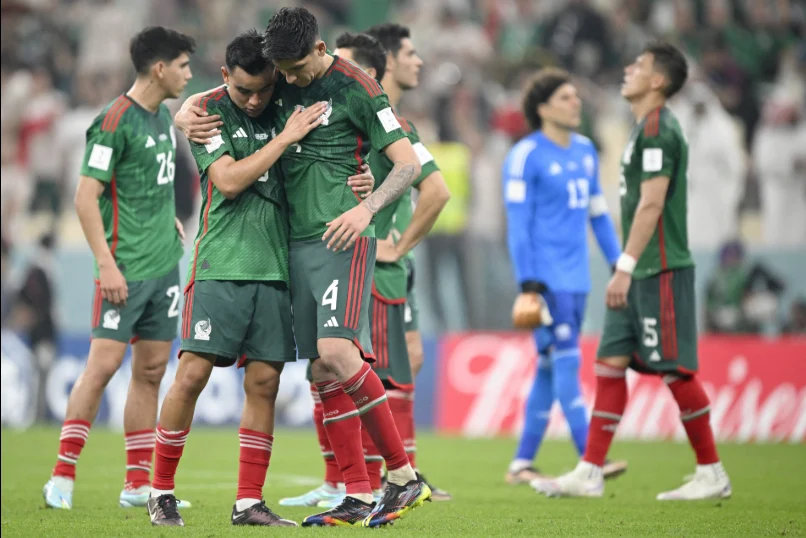
The emotional toll of the defeat was written clearly across the faces of the players who carried the hopes of over one hundred and thirty million people on their shoulders. When you look closely at international sports, it is easy to forget that underneath the sponsorships and the media hype, these are human beings breaking under immense psychological pressure. Yesterday, that pressure became a visible weight. Santiago Giménez, the young symbol of Mexico’s attacking future and the man expected to carry the goal scoring burden for the next decade, collapsed to his knees right at the center circle the moment the referee blew the whistle.
Having fought relentlessly through every single minute of the tournament, chasing down blind passes, absorbing physical hits from towering defenders, and trying to spark life into the offense, his tear streaked face captured the sheer, crushing exhaustion of a young striker who simply ran out of miracles just when his country needed them most. He remained on the ground for what felt like an eternity, his forehead pressed against the turf, isolated in his grief despite being surrounded by eighty thousand people.
The heartbreak was equally devastating for the veteran leaders of the squad, men who knew that this tournament represented their final appearance on the world stage. Midfield general Edson Álvarez stood completely frozen near the penalty box, refusing to move toward the locker room or accept the consoling pats on the back from opposing players. He kept staring up at the steep, towering stands of the Azteca, looking directly into the eyes of the supporters as if trying to personally apologize to the fanatical crowd that had chanted his name with so much passion for weeks.
For Álvarez and the older guard, this tournament was meant to be the absolute pinnacle of their footballing careers, a historic knockout run in front of their own people, their own families, and their own children. The brutal finality of the exit was visibly crushing to the team’s entire leadership structure, closing a competitive chapter that can never be reopened.
When the Mariachi Fades: The Silence of the Fans
Outside the stadium gates, the contrast before and after the match was truly devastating. Hours before kickoff, the streets surrounding the venue were a chaotic, beautiful carnival of green jerseys, oversized sombreros, traditional mariachi bands, and intricate face paint that had brought unmatched life and color to the early stages of the tournament. The smell of street food mixed with the sound of trumpets and collective laughter created an atmosphere of pure celebration.
However, within minutes of the final whistle, that joyful carnival transformed into a somber, eerie landscape of quiet grief. The trumpets were packed away into their cases, and the large wooden drums fell silent. In public plazas from the historic Zócalo to the massive immigrant communities watching from plazas in Canada and the United States, fans who had spent the entire day singing Cielito Lindo at the top of their lungs were left holding their heads in their hands, sitting in complete silence on the concrete sidewalks.
The sentiment among the fans gathered outside was not one of toxic anger, aggressive hostility, or the typical sports frustration that leads to broken plastic chairs and loud arguments. Rather, it was a profound, hollow sadness, a collective mourning for an opportunity that will not return to this region for decades. Families walked hand in hand toward the train stations without speaking a single word to one another.
They had given absolutely everything they had, their voices, their life savings to buy tickets, and their unconditional love, to turn their home stadiums into an intimidating, loud fortress for any opponent that dared to step inside. To see that fortress breached and the collective national dream cut short on their own grass felt deeply, painfully unfair to a population that treats the sport as a core pillar of national identity.
The Generational Shift in the Shadows of Defeat
As the dust begins to settle on this tournament exit, the conversation will naturally turn toward the future, but that transition is painful. The younger players who watched their idols weep on the pitch must now carry the burden of rebuilding the national team’s identity.
The tears shed by the fans and players alike highlight the heavy price of sporting obsession. When a country invests so much of its emotional well being into ninety minutes of football, the crash following a defeat is catastrophic.
Yet, even in the depths of this sporting depression, there is a resilient beauty to the Mexican football culture. Long after the stadium lights are turned off and the cleanup crews sweep away the leftover green confetti, the fundamental passion remains untouched.
Mexico’s 2026 World Cup story may have ended without the fairy tale finale everyone expected and fought for, but the undying, beautiful loyalty of its people proved once again that while tournament trophies are temporary things, the passion of El Tri is completely eternal. They will mourn today, they will analyze the mistakes tomorrow, but eventually, the green shirts will be washed, the songs will be sung again, and the endless cycle of hope and love for the beautiful game will rebuild itself from the ashes of this heartbreak.



Post Comment