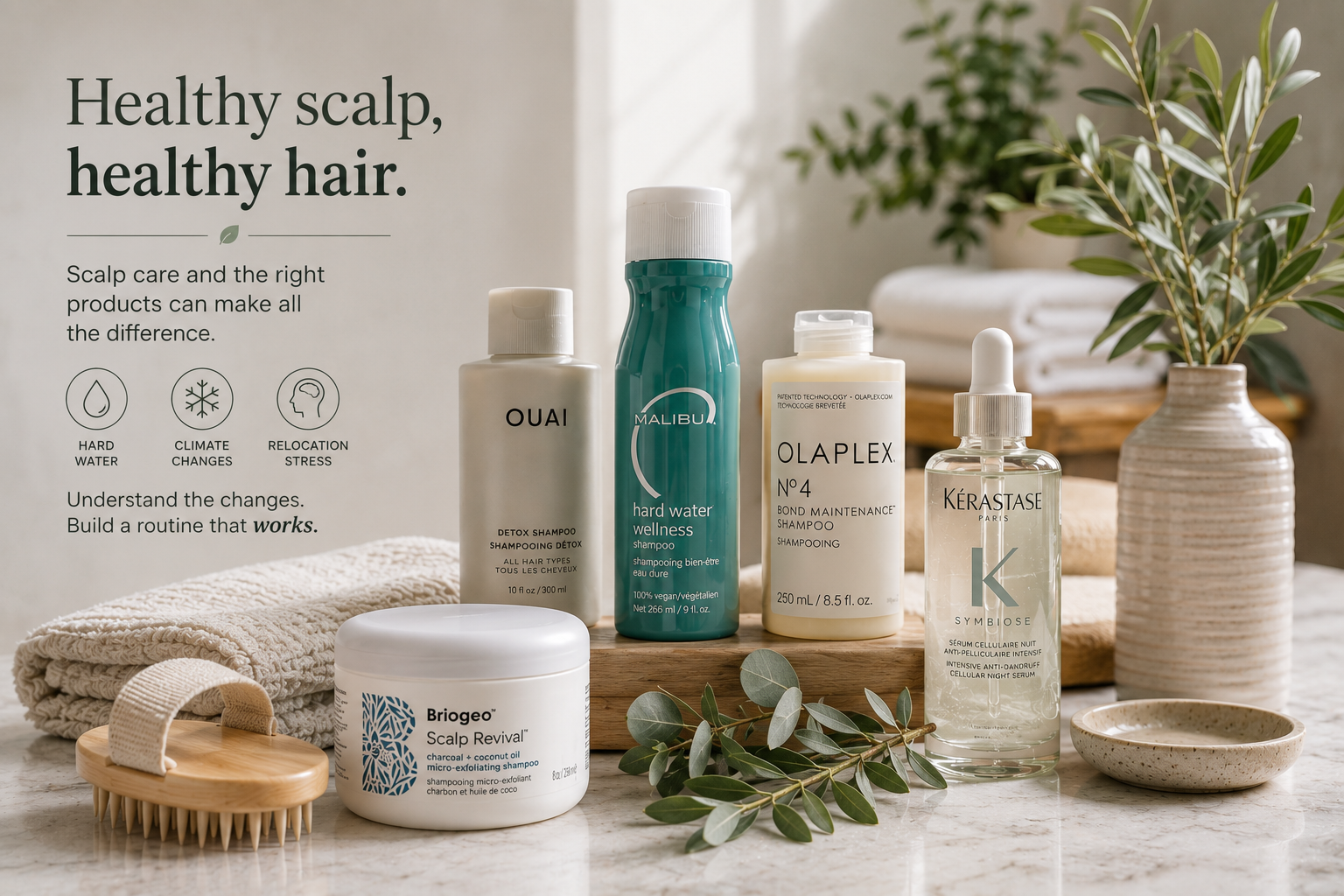
The Scalp Care Revolution: Why Your Hair May Change After Moving to Canada or the United States
Hard water, dry weather, indoor heating and relocation stress can all affect how your hair and scalp feel. Here is how to protect them and choose the right products.
For years, haircare focused almost entirely on the strands. Shampoos promised more shine, conditioners promised softness and masks promised to repair visible damage.
Today, the beauty industry is paying much more attention to where healthy hair begins: the scalp.
Scalp serums, exfoliating treatments, detox shampoos and microbiome-friendly formulas are becoming essential parts of modern haircare. This shift is especially relevant for immigrants, international students and visitors who notice unexpected changes after arriving in Canada or the United States.
Many newcomers report that their hair suddenly feels drier, rougher or more difficult to manage. Some also notice more breakage or shedding than they experienced in their home country.
The water may play a role, but it is rarely the only explanation.
Changes in climate, humidity, indoor heating, diet, stress and daily routines can all affect the scalp and hair. Understanding these factors is the first step toward building a routine that works in a new environment.
Why Does Hair Feel Different After Moving to North America?
Moving to another country changes more than your address. Your body and daily routine must adjust to a different climate, water supply, diet and lifestyle.
After arriving in Canada or the United States, some newcomers notice:
- Increased dryness
- More frizz
- Reduced shine
- Hair that feels coated or heavy
- Faster color fading
- More tangling
- Increased breakage
- A dry, itchy or flaky scalp
- More hair in the shower or on the brush
These changes can appear within weeks, but they do not always have one single cause.
Cold outdoor temperatures and low humidity can remove moisture from the hair. Indoor heating can make the air even drier during winter. A stressful relocation, changes in eating habits or an illness can also influence the hair-growth cycle.
Stressful events can trigger temporary excessive shedding known as telogen effluvium. According to the American Academy of Dermatology, this condition can cause significantly more hair to shed than the usual daily amount and may appear after physical or emotional stress.
That means someone who notices more shedding after immigrating should not immediately assume that the local water is causing hair loss.
Hard water may contribute to buildup, dryness and breakage. However, substantial shedding from the root can also be related to stress, nutritional changes, hormones, illness or an underlying medical condition.
What Is Hard Water?
Hard water contains relatively high concentrations of dissolved minerals, primarily calcium and magnesium. The level varies considerably between cities and even between neighbourhoods, depending on the local water source and treatment system.
Hard water is generally safe for drinking and bathing. The challenge for haircare is that minerals can remain on surfaces after the water evaporates.
You may already recognize hard water through:
- White marks on faucets or shower glass
- Scale around taps
- Soap that does not lather easily
- A film left on dishes or bathroom surfaces
- Hair that feels coated shortly after washing
Just as mineral deposits can accumulate on household surfaces, residue may also remain on the hair.
Can Hard Water Damage Your Hair?
The word “damage” should be used carefully.
Hard water does not automatically destroy healthy hair or directly cause permanent hair loss. However, repeated mineral buildup may affect how the hair looks, feels and responds to products.
Hair exposed to mineral-rich water may become:
- Dull
- Rough
- Dry
- Difficult to detangle
- More prone to frizz
- Less responsive to conditioners
- More vulnerable to mechanical breakage
Mineral residue can also interfere with hair colour, especially blonde, highlighted or chemically treated hair. Some people notice brassiness, uneven colour or faster fading.
Breakage can sometimes look like hair loss. The difference is that breakage usually produces shorter pieces and uneven lengths, while shedding releases the entire strand from the scalp.
How to Tell Breakage from Hair Shedding
Understanding the difference can help you decide whether to change your routine or consult a professional.
Signs of breakage
- Shorter hairs around the sink or clothing
- Split ends
- Uneven lengths
- Hair snapping while brushing
- Increased tangling
- Rough or brittle strands
Signs of shedding
- Full-length strands coming from the root
- More hair than usual in the shower drain
- A noticeably thinner ponytail
- Increased shedding across the entire scalp
- Hair loss that continues for several weeks
The American Academy of Dermatology notes that losing approximately 50 to 100 hairs per day is normal. Consistently shedding much more than that may indicate excessive hair shedding or another form of hair loss.
Persistent shedding, bald patches, scalp pain or visible thinning should be assessed by a doctor or dermatologist rather than treated only with cosmetic products.
The Scalp Care Revolution
The growing interest in scalp health is part of a broader trend known as the “skinification” of haircare.
Consumers now expect scalp products to contain ingredients traditionally associated with facial skincare, including:
- Niacinamide
- Salicylic acid
- Hyaluronic acid
- Ceramides
- Peptides
- Panthenol
- Caffeine
- Plant extracts
The goal is no longer simply to make the hair look better after one wash. Modern routines aim to maintain a clean, comfortable and balanced scalp while reducing buildup around the roots.
Scalp care can be especially useful for people dealing with excess oil, product residue, dryness or flaking. However, stronger exfoliating ingredients may irritate sensitive scalps when overused.
How to Protect Your Hair from Hard Water
You do not need a complicated routine. The most effective approach is usually a balance of mineral removal, gentle cleansing and moisture restoration.
1. Find out whether your water is hard
Look for a local municipal water-quality report or use a simple home hardness test. Avoid assuming that every city in Canada or the United States has the same water.
Water hardness can vary significantly by region.
2. Use a chelating or hard-water shampoo
A regular clarifying shampoo removes oils and styling residue. A chelating formula is designed to bind to certain mineral and metal ions so they can be washed away.
The terms are often used together in marketing, but they are not always identical. Look for products that specifically mention hard-water minerals or metal buildup.
Use them according to the label. Overusing a strong cleansing product can leave already-dry hair feeling stripped.
3. Follow with a moisturizing conditioner or mask
After a detox wash, use a conditioner or mask appropriate for your hair type.
Helpful ingredients may include:
- Glycerin
- Panthenol
- Ceramides
- Squalane
- Amino acids
- Shea butter
- Lightweight plant oils
Fine hair may prefer a lightweight conditioner, while coarse, curly or chemically processed hair may need a richer mask.
4. Reduce unnecessary heat
Mineral buildup combined with frequent high-temperature styling can make fragile hair more vulnerable to breakage.
Use a heat protectant, lower the temperature when possible and avoid repeatedly passing a tool over the same section.
5. Handle wet hair gently
Wet hair is more elastic and vulnerable to snapping.
Use a wide-tooth comb or flexible detangling brush, beginning at the ends and gradually moving upward. Avoid aggressive towel drying.
6. Consider a water-softening system
A shower filter and a water softener are not necessarily the same thing.
Many basic shower filters target chlorine, sediment or certain contaminants but may not remove most dissolved calcium and magnesium. A true ion-exchange water softener is generally more effective for addressing hardness throughout the home.
Review the product specifications carefully before purchasing a filter specifically for hard water.
Best Shampoos for Hard-Water Buildup
The products below serve different needs. A product that works well for an oily scalp may be too cleansing for very dry or highly processed hair.
1. Malibu C Hard Water Wellness Shampoo
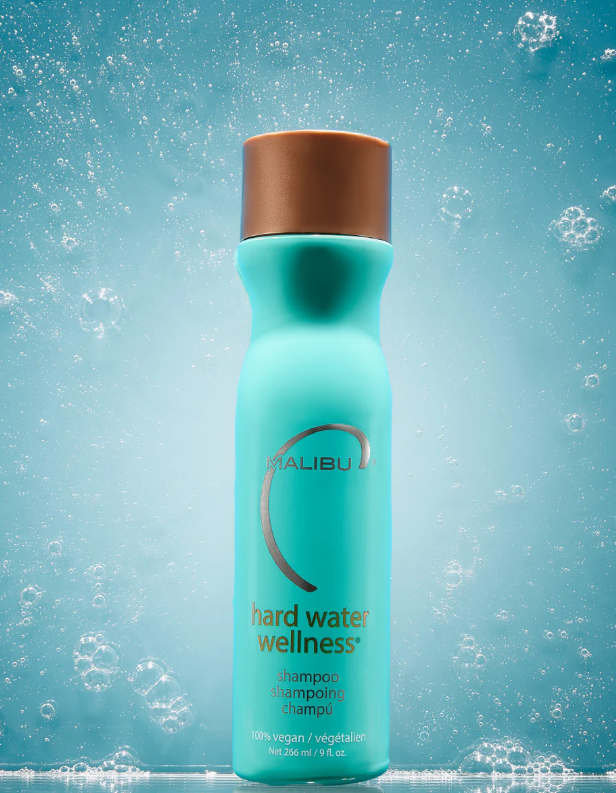
Malibu C developed this line specifically around hard-water buildup. The brand states that the shampoo uses chelating agents to bind to minerals such as calcium, magnesium and iron.
Best for: Regular exposure to mineral-rich water.
Why people choose it:
- Targets mineral buildup
- Helps restore a cleaner hair feel
- Suitable for routines focused specifically on hard water
- Can be paired with the brand’s Hard Water Wellness Remedy
Follow the product instructions, particularly if your hair is dry, coloured or chemically treated.
2. K18 Peptide Prep Detox Shampoo
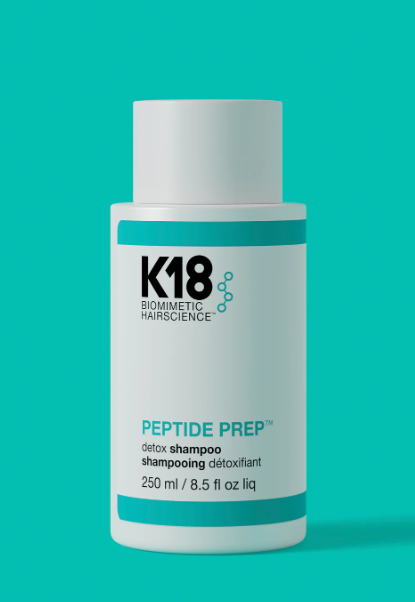
K18 positions its detox shampoo as a colour-safe clarifying formula that removes product residue, sebum and certain metals commonly found in tap water. The company reports removal testing for product buildup, sebum and copper after one wash. These figures are manufacturer claims rather than independent comparisons with every competing shampoo.
Best for: Product buildup, oily roots and colour-treated hair needing an occasional reset.
Why people choose it:
- Clarifies without being intended as a daily shampoo
- Targets product and metal residue
- Designed to be used alongside repair-focused routines
3. Ouai Detox Shampoo
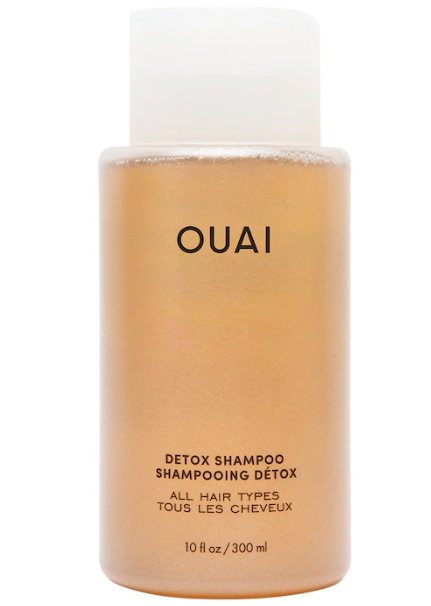
Ouai Detox Shampoo is commonly used as an occasional clarifying wash for oil, styling products and buildup.
Best for: People using dry shampoo, styling creams or multiple leave-in products.
Its cleansing strength may be too much for frequent use on dry or sensitive scalps, so it is better treated as a periodic reset rather than an everyday shampoo.
4. Redken Hair Cleansing Cream
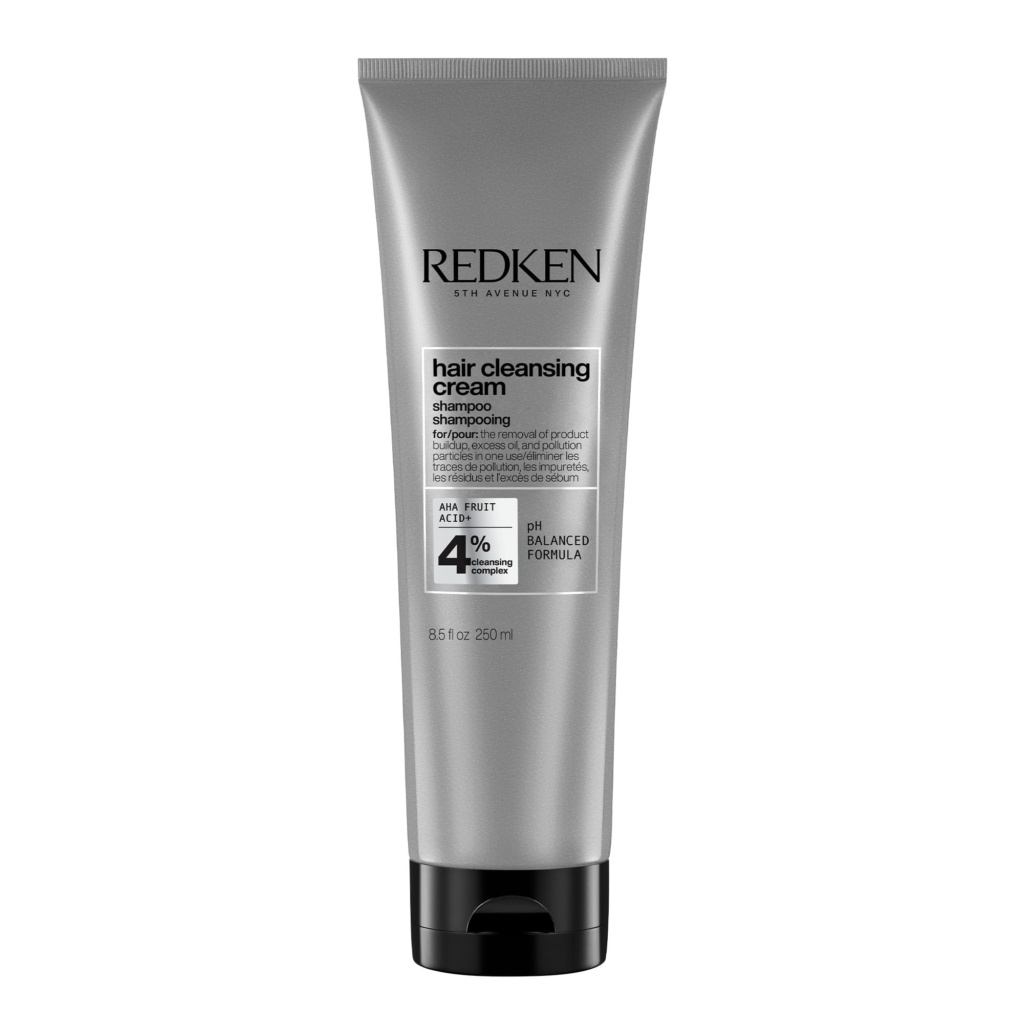
Redken Hair Cleansing Cream is a salon-style clarifying shampoo intended to remove accumulated residue.
Best for: Heavy product users, swimmers and people who feel that regular shampoo no longer leaves their hair clean.
Follow it with a conditioner or mask, especially on highlighted or porous hair.
5. Living Proof Clarifying Detox Shampoo
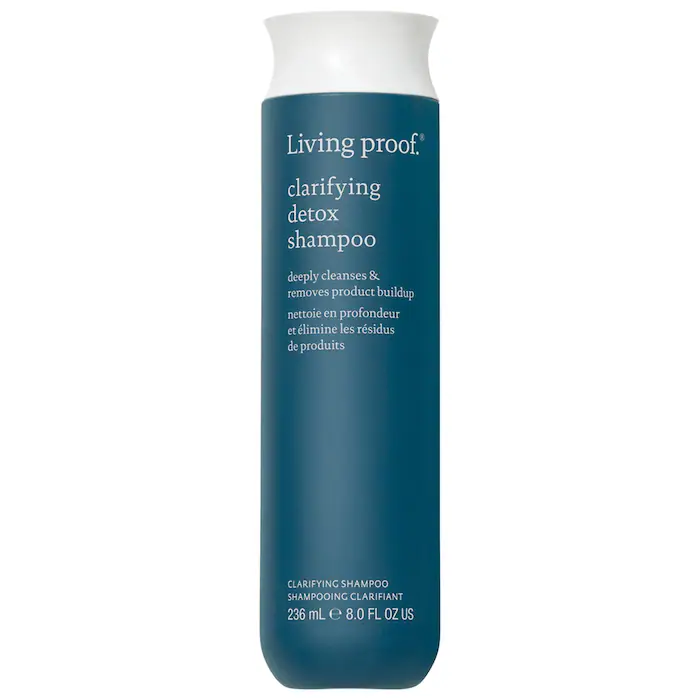
This option targets common forms of buildup and may suit people wanting an occasional deep cleanse from a mainstream salon brand.
Best for: Hair weighed down by styling products, oils or environmental residue.
As with any detox shampoo, frequency should depend on your hair type and level of buildup.
Clarifying Shampoo vs. Regular Shampoo
A common mistake is replacing regular shampoo completely with a detox formula.
A better routine may look like this:
Most wash days
Use a gentle shampoo selected for your scalp and hair type.
Every one to four weeks
Use a clarifying or chelating shampoo, depending on mineral exposure, product use and how your hair responds.
After detoxing
Apply conditioner or a moisturizing mask to the mid-lengths and ends.
Very oily scalps or heavy product users may need more frequent clarifying. Dry, curly, bleached or sensitive hair may need it much less often.
What About Scalp Serums?
Scalp serums can support hydration and comfort, but they do not remove hard-water minerals.
Choose the serum according to the concern:
- Dryness: Hyaluronic acid, glycerin or panthenol
- Oiliness and buildup: Niacinamide or carefully formulated salicylic acid
- Sensitivity: Fragrance-free, calming formulas
- Flaking: A proper anti-dandruff treatment when dandruff is the cause
Do not apply multiple strong scalp actives at once. Burning, persistent redness or worsening flaking is a reason to stop and seek professional advice.
Recommended Haircare Brands by Need
For hard-water buildup
- Malibu C
- K18
- Redken
- Ouai
For damaged or chemically treated hair
- K18
- Olaplex
- Redken Acidic Bonding Concentrate
- Kérastase Première or Résistance
For scalp-focused care
- Briogeo
- Kérastase
- Living Proof
- The Ordinary
- Ouai
For dry and curly hair
- Pattern Beauty
- Briogeo
- Curlsmith
- SheaMoisture
- Redken All Soft Mega Curls
Brand reputation alone is not enough. The best formula depends on your texture, scalp condition, chemical treatments and washing frequency.
A Simple Routine for Newcomers
Here is a practical routine for someone whose hair changed after moving to Canada or the United States:
- Check the local water-hardness level.
- Use a gentle everyday shampoo suitable for your scalp.
- Add a chelating or detox shampoo periodically.
- Condition after every wash.
- Use a richer mask when the hair feels rough or brittle.
- Apply a leave-in conditioner to the lengths and ends.
- Limit high-heat styling.
- Track whether you are seeing breakage, root shedding or both.
- Seek medical advice when shedding is persistent or significant.
Avoid changing every product at once. Introduce one adjustment at a time so you can see what actually helps.
When Hair Shedding Needs Professional Attention
Haircare products can improve dryness, buildup and breakage, but they cannot diagnose or treat every cause of hair loss.
Speak with a healthcare professional when you notice:
- Sudden or severe shedding
- Round or clearly defined bald patches
- Scalp pain, sores or inflammation
- A widening part
- A receding hairline
- Thinning that continues for several months
- Other symptoms such as fatigue or unexplained weight changes
Temporary stress-related shedding often improves after the trigger resolves, but a dermatologist can distinguish it from other causes and recommend appropriate testing or treatment. (Cleveland Clinic)
Final Thoughts
Many visitors and immigrants genuinely notice that their hair changes after arriving in Canada or the United States.
The experience is not imaginary, but the explanation is usually more complex than “North American water causes hair loss.”
Hard water can leave mineral residue that contributes to dullness, roughness, dryness and breakage. At the same time, climate changes, indoor heating, relocation stress, nutrition and health factors may influence the scalp and hair-growth cycle.
The most effective response is not to buy every trending product. It is to identify the actual problem.
A carefully chosen detox shampoo can help with mineral or product buildup. Moisturizing treatments can reduce dryness and breakage. Gentle scalp care can improve comfort. Persistent shedding, however, deserves medical attention.
Healthy hair begins with understanding both the scalp and the environment around it.


Post Comment