The Orange Haze: Why Toronto’s Air Quality Crisis is a Severe Public Health Threat We Cannot Ignore
As wildfire smoke from Northern Ontario blankets the Greater Toronto Area in a toxic yellow shroud, the city grapples with the worst air quality in the world, demanding immediate protective action.
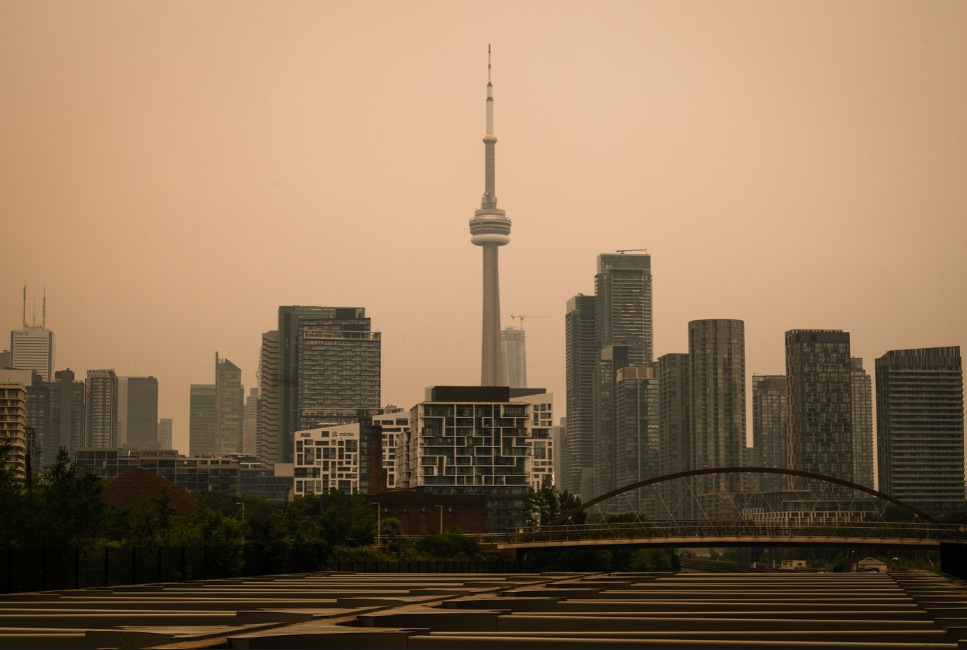
For anyone stepping outside in Toronto, the physical reality is impossible to miss. The sky has taken on a sickly, yellow orange hue, the smell of burning wood hangs heavy in the streets, and iconic landmarks like the CN Tower have been almost entirely erased by a dense, suffocating blanket of smoke.
This is not a temporary visual inconvenience or a simple weather anomaly. This is a severe environmental and public health crisis.
Environment Canada has officially issued an Air Quality Health Advisory, with Toronto’s Air Quality Health Index (AQHI) reaching a level of 10+ representing a Very High Risk category. According to live data from global air monitoring platform IQAir, the atmospheric toxicity in the Greater Toronto Area has officially ranked as the worst air quality of any major city in the entire world, eclipsing traditionally highly polluted global megacities.
This current crisis is driven by intense, fast moving wildfires blazing across Northern Ontario. The smoke from these fires has been carried over one thousand kilometers southeast by the jet stream, settling directly over Southern Ontario.
Making matters worse, this toxic smoke has collided with an extreme summer heatwave, which recently shattered local temperature records with a grueling 37.6 degrees Celsius in the downtown core. The combination of intense heat and microscopic particulate matter has created a dangerous atmospheric trap, turning the air we breathe into a silent threat.
The Toronto skyline and the CN Tower under the dense orange haze caused by wildfires. Source: CP24
The Hidden Threat: Understanding PM2.5 and Your Lungs
The primary danger of wildfire smoke does not come from the visible ash or the strong smell, but from invisible particles known as PM2.5. These are fine particulate matters that are smaller than 2.5 micrometers in diameter, about thirty times smaller than the width of a single human hair. Because they are so incredibly small, our bodies natural respiratory defense systems cannot filter them out.
When we inhale this smoky air, these microscopic particles travel deep into our lungs, bypassing the nasal passages to settle in the alveoli, where oxygen exchange occurs. From there, they can directly enter our bloodstream, triggering systemic inflammation throughout the body.
The Canadian Lung Association warns that exposure to this level of wildfire smoke can have serious, long term health consequences, even for individuals who live hundreds of kilometers away from the actual flames. The risk is not distributed equally.
Health Canada and local medical officials have identified highly vulnerable groups who must exercise extreme caution. This includes adults over the age of sixty five, pregnant individuals, infants, young children, and anyone living with chronic health conditions such as asthma, chronic obstructive pulmonary disease, or cardiovascular illnesses. For these at risk populations, breathing this air can trigger immediate respiratory distress, severe asthma attacks, and increased risk of cardiac events.
Even for young, healthy individuals, the high concentration of PM2.5 can cause immediate physical symptoms. Many residents are already reporting scratchy throats, persistent headaches, runny noses, and a dry, hacking cough. These are not minor irritations, they are clear physiological warning signs from your respiratory system that the air is toxic and your body is actively fighting to expel foreign matter.
The Real Cost: Community Evacuations and Canceled Programs
To understand the gravity of the situation, we must look at the source of the smoke. In northwestern Ontario, the speed and ferocity of these wildfires have forced emergency, mandatory evacuations of several First Nations communities. Entire historic areas have been devastated, with families fleeing by boat and train under terrifying conditions.
The smoke we see over Southern Ontario is the physical echo of a disaster that is displacing families and destroying northern ecosystems. When we look up at the orange sky, we are looking at the carbon and ash of northern forests, a stark reminder of our changing climate and the growing severity of extreme weather events.
The impact of this air quality crisis has already disrupted daily life across the Greater Toronto Area. Recognizing the severe health risks, the City of Toronto took the decisive step to cancel or postpone all outdoor registered programs, including CampTO field trips, moving activities indoors wherever possible.
Furthermore, GO Transit has reported scheduling delays as the thick blanket of smoke impacts visibility along major transit corridors. Across the city, the bustling summer energy of outdoor patios, parks, and running trails has been replaced by empty streets and residents wearing protective masks once again.
How to Protect Yourself: Practical Steps Supported by Health Officials
This is a time for caution, preparation, and community responsibility. Public health agencies, including Toronto Public Health and Environment Canada, have issued clear, actionable guidelines to help residents minimize their exposure to this toxic air:
- Limit Outdoor Exposure: Reschedule or cancel all strenuous outdoor physical activities, including running, cycling, and organized sports. If you must go outside, reduce your level of physical exertion to keep your breathing shallow and slow.
- Keep Indoor Air Clean: Keep your home windows and doors closed tightly. Set your air conditioning system to “recirculate” mode so that you are not pulling contaminated outdoor air inside. If you have a portable HEPA air purifier, run it continuously in the rooms where you spend the most time.
- Wear the Right Mask: If you must spend extended time outdoors for work or essential travel, a standard cloth mask or surgical mask will not protect you from PM2.5 particles. You must use a well fitted respirator mask, such as an N95 or KN95, which is specifically designed to filter out microscopic smoke particles.
- Monitor Vulnerable Neighbors: Check in on elderly neighbors, families with young infants, and friends with respiratory conditions to ensure they have a cool, safe, and clean indoor environment.
- Stay Informed: Keep a close eye on the local Air Quality Health Index updates. Conditions can fluctuate rapidly depending on wind patterns, and staying updated will help you make safe decisions for your family.
This air quality crisis is a powerful, sobering reminder of our vulnerability to environmental disasters. The air we share is our most precious, vital resource, and when it turns toxic, it requires our absolute respect and immediate adaptation. Stay inside, protect your lungs, and let us hope for a shift in the northern winds.


Post Comment