Why Multisensory Experiences Are Reshaping Consumer Behavior and Brand Strategy
Consumers Don’t Buy Products. They Buy Experiences.
Every year, a handful of products seem to appear out of nowhere and dominate social media.
They aren’t always the cheapest, the most innovative, or even the best-performing products on the market.
What they have in common is something far more powerful.
They create an experience that people want to talk about.
In today’s attention economy, consumers aren’t simply looking for products that solve problems. They’re looking for products that surprise them, spark curiosity, evoke emotion, and become part of a story worth sharing.
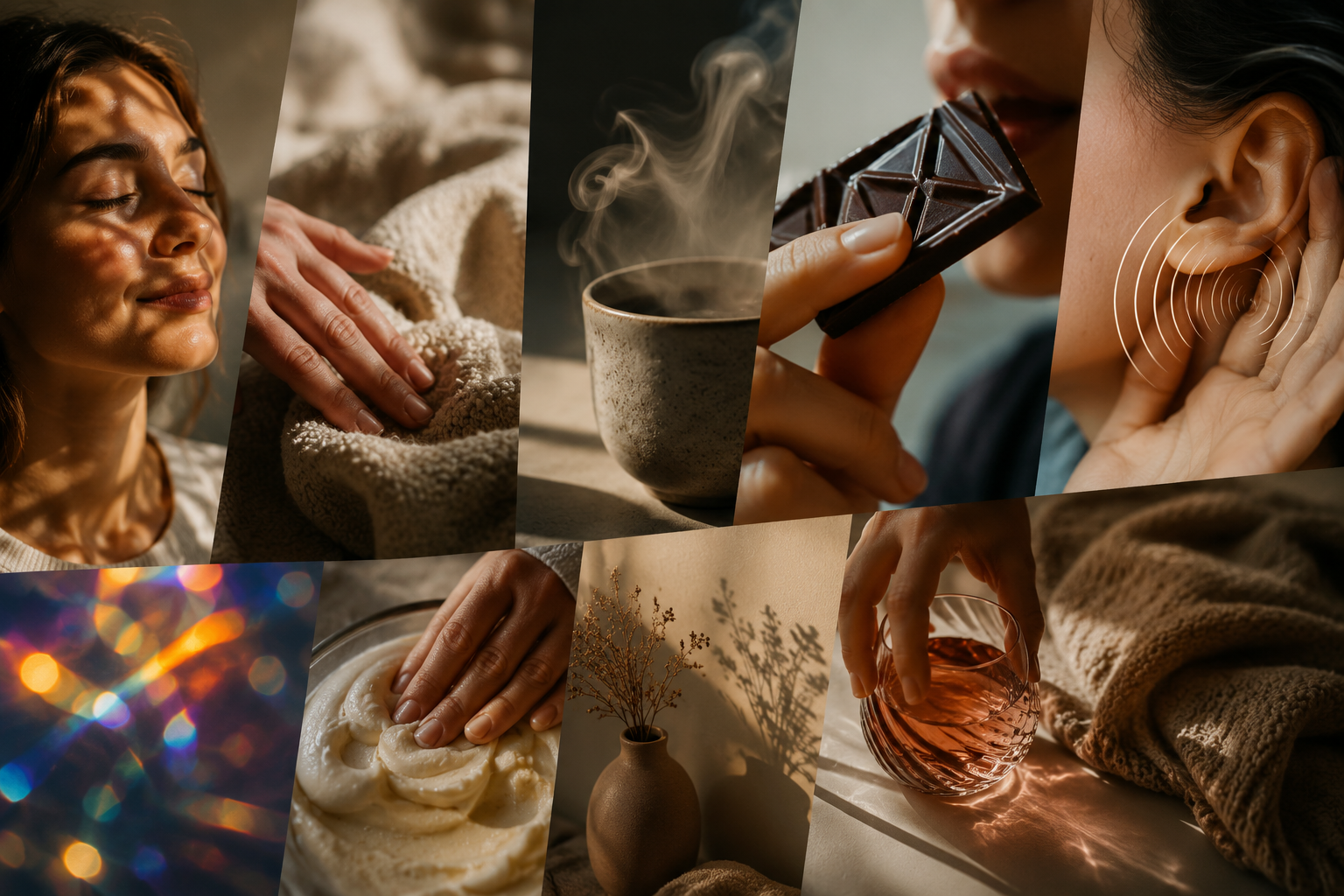
Recent industry research suggests that multisensory experiences are becoming one of the strongest drivers of consumer engagement. Brands that appeal to multiple senses are not only attracting attention they’re creating deeper emotional connections that influence purchasing decisions.
For businesses, this represents a fundamental shift in how products, services, and customer experiences should be designed.
The Experience Economy Has Entered a New Era
Consumers today make thousands of purchasing decisions while surrounded by an endless stream of content.
Every swipe introduces another advertisement.
Another recommendation.
Another product.
In this environment, functionality alone is no longer enough.
The brands that stand out are those that transform ordinary purchases into memorable experiences.
People no longer buy only because something is useful.
They buy because it makes them feel something.
Excitement.
Curiosity.
Joy.
Surprise.
Belonging.
Those emotional reactions are increasingly becoming a brand’s greatest competitive advantage.
Why Some Products Go Viral
The biggest product sensations of recent years share one important characteristic.
They stimulate more than one sense.
Whether it’s an unexpected texture, premium packaging, satisfying sounds, vibrant colors, or a unique presentation, these products naturally invite people to experience them—and then share them.
Social media amplifies these moments.
A satisfying sound.
A dramatic visual.
An unusual texture.
A memorable unboxing.
These experiences become content before they become products.
And when consumers voluntarily create content around a product, brands gain something advertising can rarely buy: authentic attention.
Social Media Is Changing Consumer Expectations
Platforms like Instagram, TikTok, Pinterest, and YouTube have changed the way people discover brands.
Consumers increasingly decide what they want after seeing someone else experience it.
This means products are now evaluated not only by quality or price, but also by how engaging they appear on screen.
Businesses are beginning to understand that every customer interaction has the potential to become content.
Packaging becomes part of marketing.
Presentation becomes storytelling.
Experience becomes distribution.
Multisensory Branding Goes Beyond Food
Although food and beverage brands have helped popularize multisensory experiences, the concept applies to virtually every industry.
A hotel can create a signature scent guests immediately recognize.
A retail brand can invest in premium packaging that customers proudly photograph.
A software company can design satisfying animations and intuitive interactions.
A coffee shop can become memorable because of its atmosphere rather than its menu alone.
Even professional service firms can create sensory experiences through workspace design, printed materials, photography, presentations, and every detail of the client journey.
Consumers remember experiences.
Features are often forgotten.
The Future Is Inclusive Experience Design
The next evolution of multisensory branding isn’t simply about creating products that are more entertaining.
It’s about creating experiences that work better for more people.
Businesses are beginning to recognize that different audiences experience products differently.
Older adults.
Neurodivergent individuals.
Consumers with changing health needs.
These groups represent an opportunity for brands to design more thoughtful, accessible, and enjoyable experiences.
What’s remarkable is that improvements designed for specific audiences often benefit everyone.
Inclusive design frequently becomes better design.
What This Means for Businesses
Regardless of industry, one question is becoming increasingly important:
What experience does your brand create?
Not just visually.
But emotionally.
Ask yourself:
• What feeling does my brand leave behind?
• Which senses am I intentionally engaging?
• What moments would customers naturally want to photograph or share?
• Is my customer journey simply efficient—or genuinely memorable?
The answers to these questions may define the strongest brands of the next decade.
From Features to Feelings
For years, businesses competed by adding more features.
Today, consumers have more choices than ever before.
As products become increasingly similar, experience becomes the differentiator.
Brands that win aren’t necessarily those with the biggest budgets.
They’re the ones that understand how people feel during every interaction.
Because memorable experiences create memorable brands.
Final Thoughts
The future of marketing isn’t simply about attracting attention.
It’s about earning it.
Consumers are becoming more selective, more experience-driven, and more willing to share products that surprise or delight them.
Businesses that intentionally design experiences—not just products—will build stronger emotional connections, encourage organic word-of-mouth, and create brands that people remember long after the purchase is over.
In an increasingly crowded marketplace, the brands that stand out won’t be those that shout the loudest.
They’ll be the ones that create experiences worth talking about.
Editorial Note
This article was prepared by the NORAM editorial team using insights from the June Edition of Mintel Spotlight, complemented by independent research and editorial analysis of branding, consumer behavior, and marketing trends. While inspired by Mintel’s industry research, all interpretations, perspectives, and conclusions expressed in this article are original to NORAM.




Post Comment